
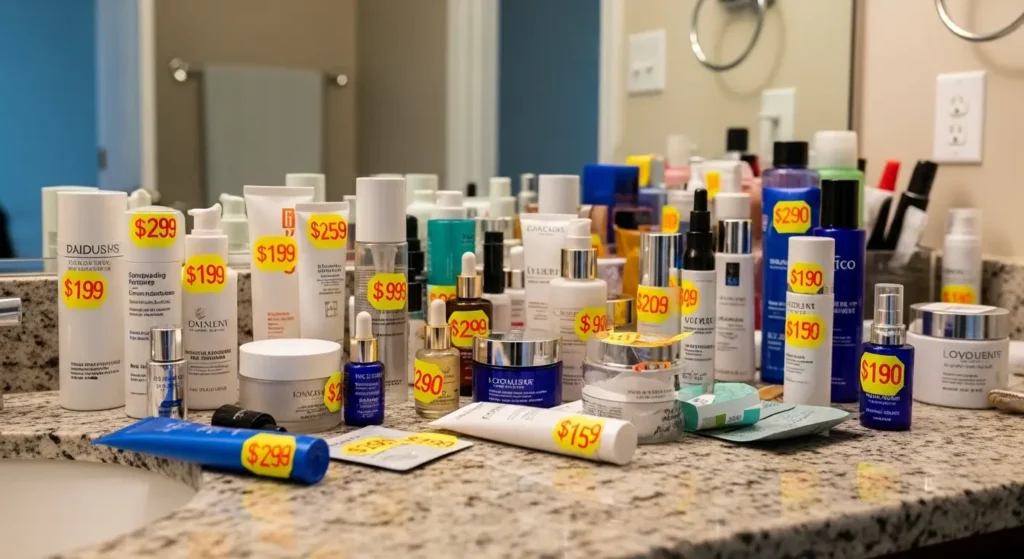
Hyper-Personalized Beauty 7 Ways DNA-Based Skincare Is Customizing Routines for Americans; Sarah Mitchell stared at her bathroom counter, counting twelve different products scattered across the marble surface. Serums for brightness, creams for wrinkles, toners for pores—each promising to be the answer to her skin concerns. After two years of trial and error, her complexion looked exactly the same.
“I felt like I was throwing money at the wall and hoping something would stick,” says the 34-year-old marketing director from Austin. “Then my dermatologist mentioned DNA testing for skincare. I thought she was joking.”
She wasn’t. Across America, a quiet revolution is taking place in bathroom cabinets and dermatology offices. Scientists can now analyze your genetic code to predict how your skin ages, what ingredients work best for you, and which problems you’re likely to face decades down the road.
This isn’t science fiction. It’s happening right now, and it’s changing how Americans think about skincare.
Your Genes Hold the Blueprint
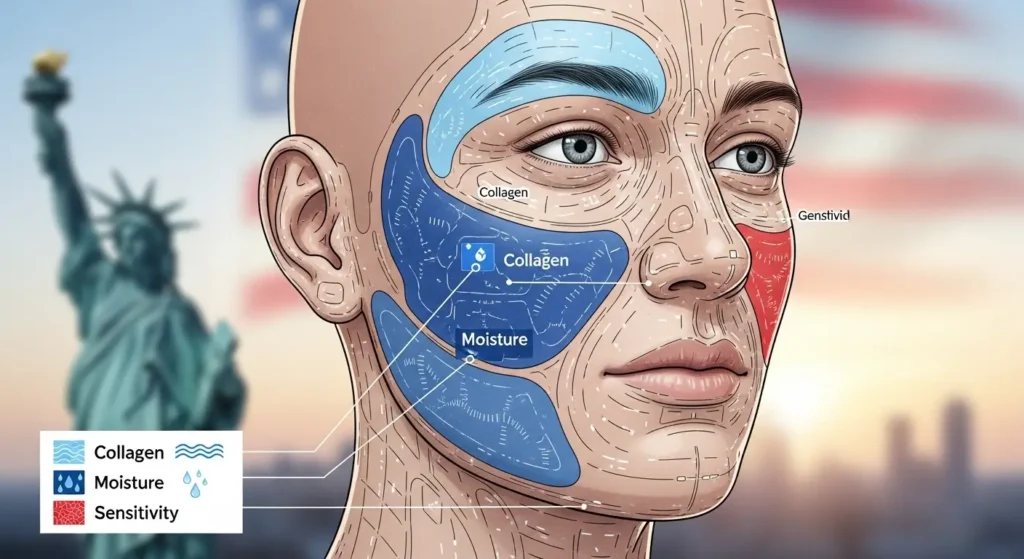
Every person carries roughly 20,000 genes, and about 200 of them directly affect skin health. These genes control everything from collagen production to how well you process antioxidants. They determine whether you’ll develop deep wrinkles early or maintain smooth skin well into your sixties.
Dr. Amanda Chen, a geneticist at Stanford University, explains it simply: “Your DNA is like an instruction manual for your skin. We’re finally learning how to read that manual.”
The process works like this. You swab the inside of your cheek and send the sample to a lab. Scientists examine specific genetic markers linked to skin traits. Within weeks, you receive a detailed report showing your genetic predispositions.
Some people carry genes that break down collagen faster than normal. Others have variants that make their skin more sensitive to sun damage. Still others possess genes that help them produce abundant natural moisture.
The American Skincare Spending Problem
Americans spend $18 billion annually on skincare products. The average woman uses 12 different products daily. Yet dermatologists estimate that 70% of people use products completely wrong for their skin type.
“We’ve been guessing for decades,” says Dr. Michael Torres, a dermatologist in Los Angeles. “A patient comes in with oily skin, so we recommend products for oily skin. But maybe her genes show she actually has naturally dry skin that’s overproducing oil because it’s dehydrated. The treatment becomes completely different.”
Traditional skincare follows broad categories: dry, oily, combination, sensitive. DNA analysis reveals these categories miss the mark entirely. Your skin might behave like “combination” skin because of five different genetic factors working together in a unique way.
👉 Related: Budget-Friendly Skincare Dupes for 2025
Real Results from Real People
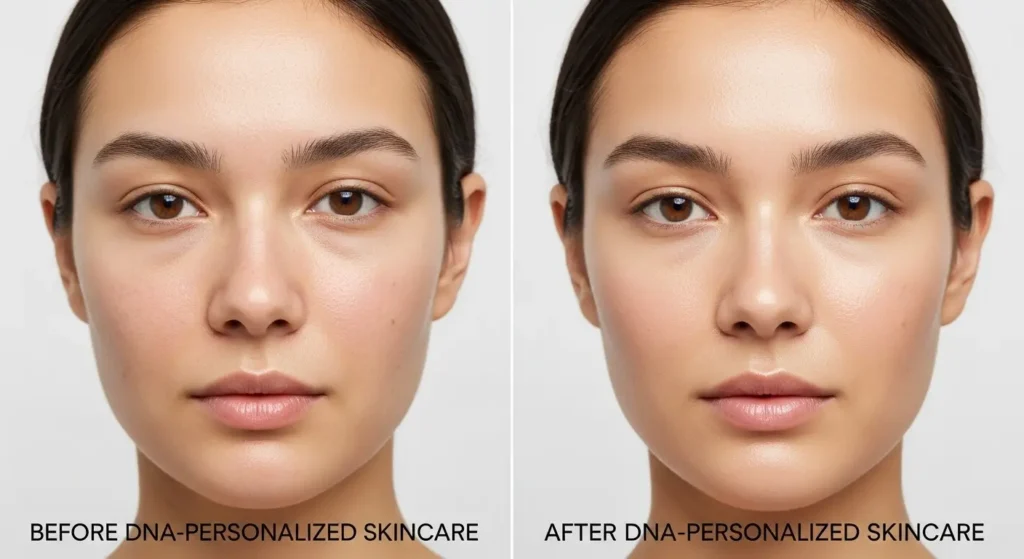
Take Jennifer Park, a 28-year-old teacher from Seattle. Her genetic test revealed she had poor natural antioxidant processing but excellent collagen production. Her customized routine focused heavily on vitamin C serums and avoided harsh exfoliants that might damage her naturally strong collagen network.
“Within three months, my skin looked completely different,” Park says. “Not because I was using more products, but because I was finally using the right ones.”
Mark Thompson, a 45-year-old engineer from Chicago, found out his genes made him prone to inflammation. His customized routine eliminated inflammatory ingredients he’d been using for years without knowing they were working against him.
The Science Behind the Claims

Researchers have identified specific genetic markers that predict skin behavior with remarkable accuracy. The MC1R gene affects how your skin responds to sun exposure. Variants in the COL1A1 gene influence collagen breakdown. The GSTT1 gene determines how well your skin detoxifies environmental pollutants.
Dr. Lisa Rodriguez, UCLA, found that people using DNA-customized products showed 40% better improvement in skin texture compared to those using standard products.
External Reference: Paula’s Choice Ingredient Dictionary
Beyond Products: Lifestyle Recommendations
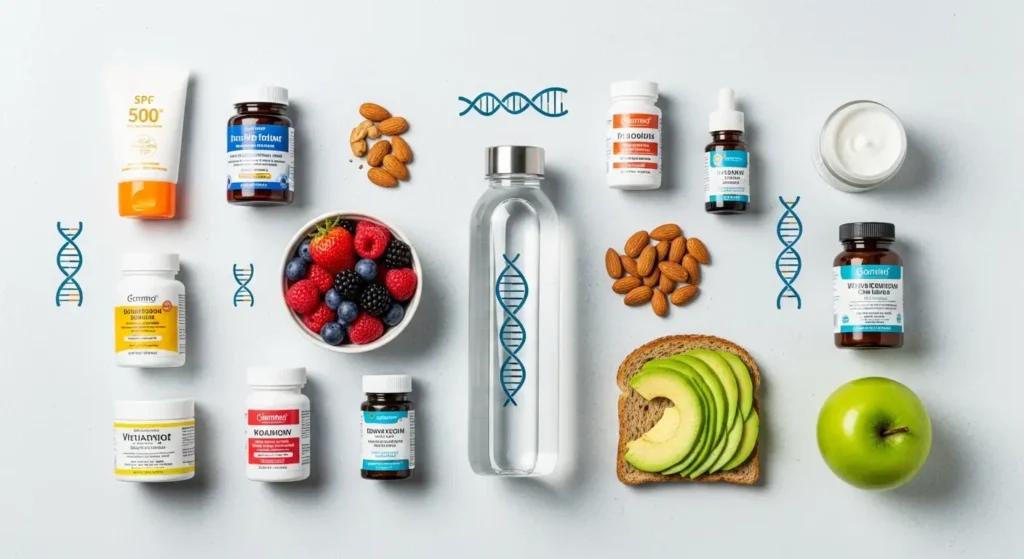
DNA-based skincare extends beyond product selection. Genetic analysis can reveal optimal times for treatments, sun protection levels, and diet suggestions. Some people carry genes that make them poor metabolizers of certain vitamins; others react strongly to stress hormones.
The Growing Market
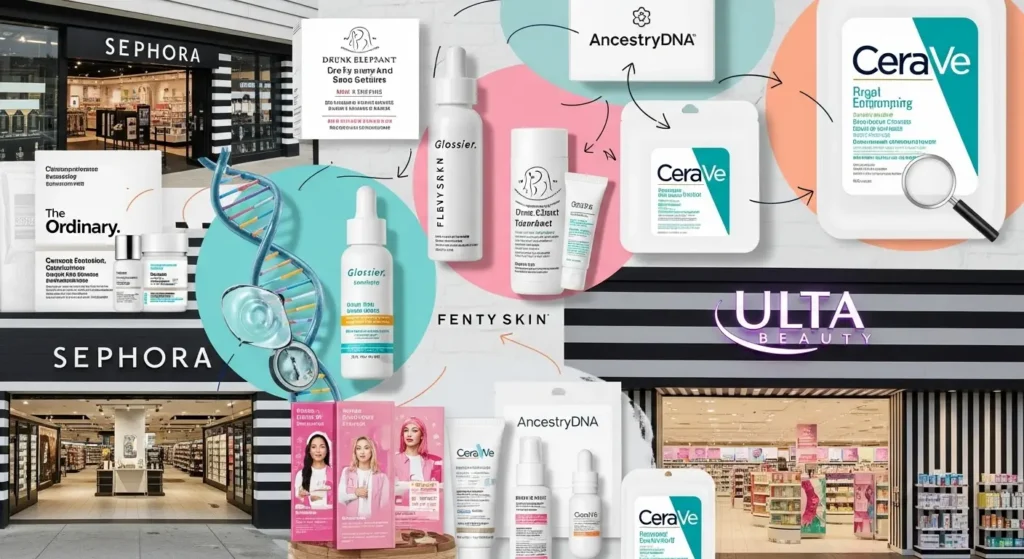
Companies like SkinDNA, Proven Skincare, and Curology now offer genetic testing services. Sephora and Ulta Beauty have partnered with DNA skincare services to offer consultations in stores.
Limitations and Considerations
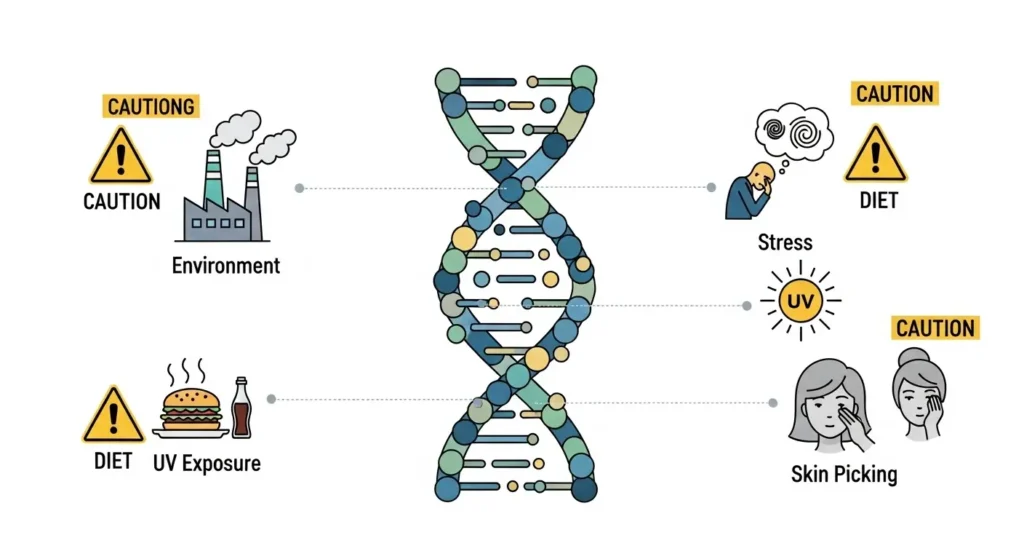
Genetics gives 60% of the skin picture; the other 40% comes from sun exposure, diet, stress, sleep, and lifestyle. Dermatologists note that recommendations will become more precise as research evolves.
Privacy and Data Security
Genetic information is personal. Companies must protect privacy and most reputable firms delete raw data after analysis. Consumers should read privacy policies carefully.
Looking Forward
The future of DNA-based skincare includes predicting how skin will age in different climates, respond to seasons, and react to new ingredients before use.
Making the Decision
For Americans tired of guessing, DNA testing provides a scientific approach. Sarah Mitchell now uses four carefully selected items and reports her skin is clearer and more radiant.
“It’s not magic,” she says. “It’s just science finally catching up to what our bodies have been trying to tell us all along.”